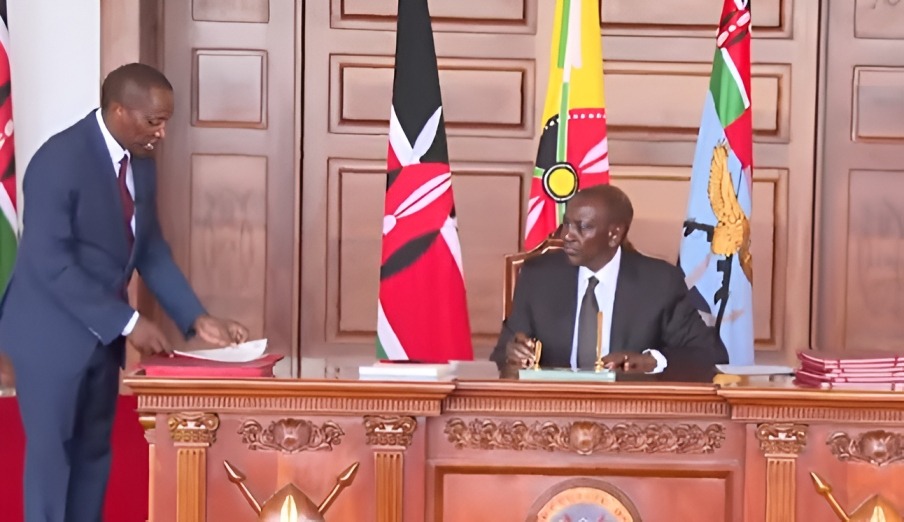
Money for police patrols, hospital bills, classrooms, and food production is set to flow with fresh urgency after President William Ruto signed a new law revising the national budget, unlocking billions to address immediate pressures facing the country.
The Supplementary Appropriations Bill (National Assembly Bill No. 16 of 2026) allows the government to adjust its 2025/2026 spending plan while giving legal backing to expenditures already incurred under Article 223 of the Constitution. The National Assembly passed the Bill with amendments on April 2, 2026 in line with Article 109(3).
Under the revised framework, total expenditure rises by Sh393.156 billion, moving from Sh4.301 trillion to Sh4.695 trillion. The national government takes up Sh363.882 billion of the increase, while Sh29.273 billion is allocated to Consolidated Fund Services.
The changes reflect a rise in both recurrent and development spending. Recurrent expenditure increases by Sh229.422 billion, while development expenditure grows by Sh134.460 billion. The estimates also approve Sh41.3 billion already spent under Article 223, mainly targeting security operations, emergency support in Arid and Semi-Arid Lands, and infrastructure development.
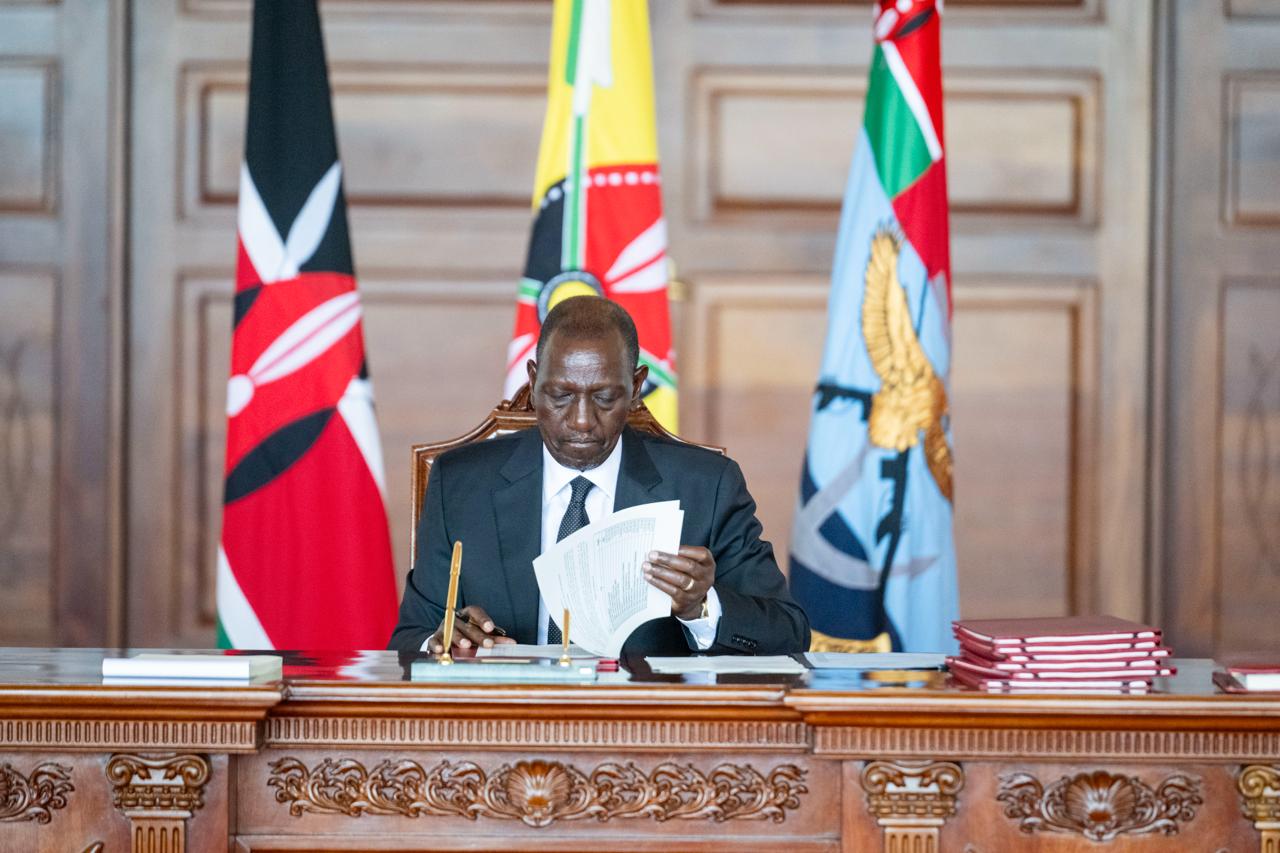 President William Ruto signs into law the Supplementary Appropriations Bill (National Assembly Bill No. 16 of 2026) at State House, Nairobi on April 8,2026.PHORO/PCS
Unlike past adjustments where development projects were often cut back, this revision maintains and strengthens funding for development. The allocations are aligned with the Bottom-Up Economic Transformation Agenda, supporting sectors such as roads, transport, agriculture, irrigation, water, health services, energy, and livestock.
The security sector receives the largest share of the additional funding at Sh60 billion. The State Department for Internal Security and National Administration is allocated Sh11.9 billion, including Sh3.9 billion for security operations, Sh2 billion for the National Integrated Security Command and Control System, Sh2 billion for compensation of victims of demonstrations, and Sh4 billion for police modernization and command systems.
The Independent Electoral and Boundaries Commission is allocated Sh2.9 billion to clear pending legal bills, a move aimed at strengthening public trust in electoral systems.
In the education sector, the Teachers Service Commission receives Sh24.2 billion to address salary shortfalls and health insurance contributions, alongside Sh3 billion for pending medical cover bills. The Higher Education Loans Board is allocated Sh4.1 billion, bringing its total to Sh45.6 billion.
Universities benefit from Sh3.88 billion to settle salary arrears from the 2017–2021 collective bargaining agreement and to support the Wings to Fly programme through technical institutions. Additional allocations include Sh6 billion for higher education institutions such as Moi University and Kabarnet University, Sh1.5 billion for the University Funding Board, and Sh2.6 billion for the Kenya-China TVET Project Phase III.
The health sector receives Sh4.7 billion under medical services and Sh775 million under public health and professional standards. This includes Sh4 billion to clear pending bills from the defunct NHIF and Sh675 million for upgrading Level 4 hospitals. The doctors’ internship programme is allocated Sh5.4 billion, bringing its total to Sh9.8 billion, while Moi Teaching and Referral Hospital receives Sh2.5 billion and the vaccines programme Sh2.6 billion.
Infrastructure and housing projects also benefit, with Sh4.5 billion allocated to the Horn of Africa Gateway projects under the State Department for Roads and Sh25 billion set aside for the Affordable Housing Programme to speed up delivery.
The agriculture sector is allocated over Sh17 billion to support food production and reforms. This includes Sh10 billion for the fertilizer subsidy programme, raising its total to Sh18 billion, Sh1 billion for tea reforms, Sh1 billion for agricultural credit through AFC, Sh2 billion for sugar sector reforms including salary arrears, and Sh1.5 billion for food security and crop diversification.
In the Blue Economy, Sh350 million is set aside to support the Oceanic Conference aimed at promoting marine conservation and sustainable fisheries. The forestry sector receives Sh2 billion for tree growing and rangeland restoration, alongside Sh500 million through the Watershed Improvement Project to expand reforestation and protect key water sources.
To finance the expanded budget, the government is seeking to boost non-tax revenue through measures such as privatization and securitization. An additional Sh17.6 billion allocation to the Kenya Revenue Authority is expected to strengthen tax collection and reduce reliance on borrowing.
Overall, the revised budget is designed to ensure continuity of essential services while addressing urgent national priorities, with the government relying on improved revenue performance to maintain fiscal balance.